Wintering your boat in Malta: what to know and arrange
Thinking of keeping your boat in Malta from November to April? The climate in honest terms, afloat or ashore, getting here, and what to arrange.
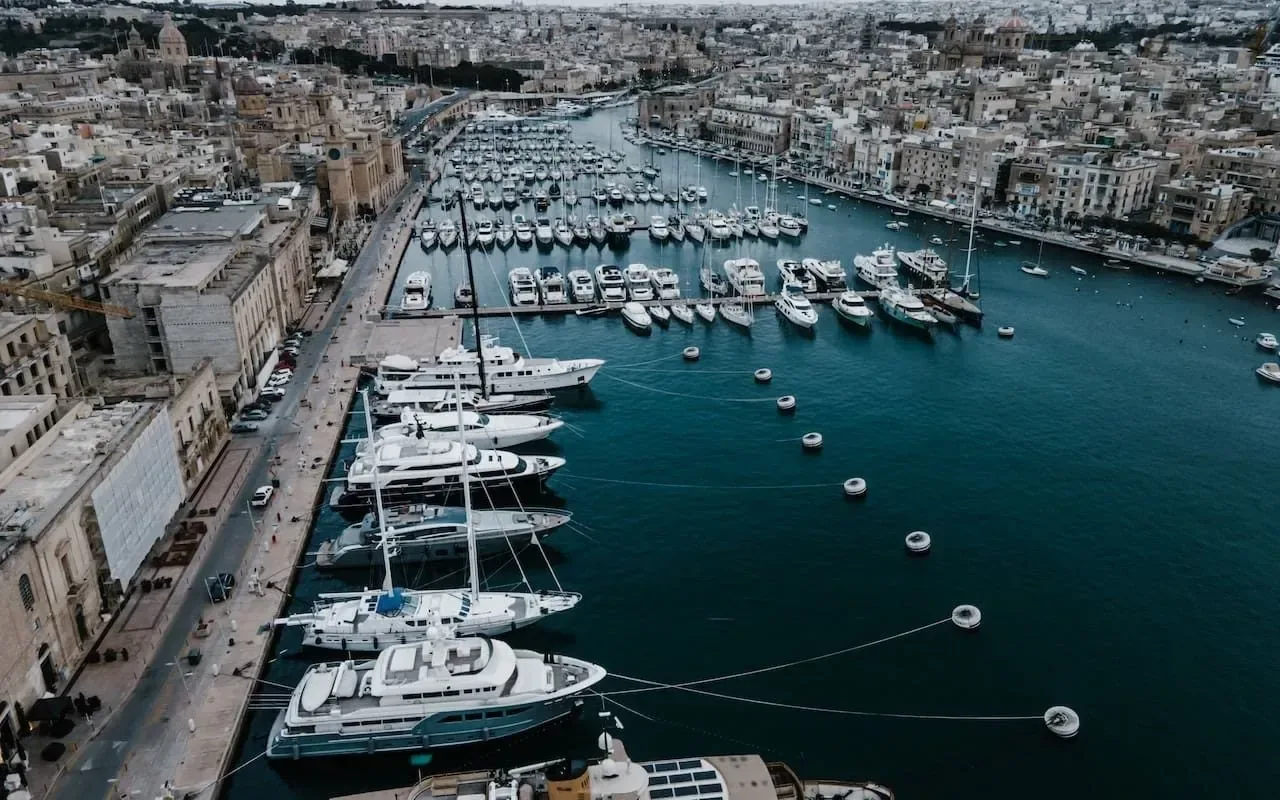
Every autumn, owners around the central Mediterranean make the same decision: where does the boat spend the winter? Malta is one of the usual answers. It is warm enough that nothing freezes, it has sheltered harbours with marinas and yards inside them, and you can fly here all year.
It is not a place to leave a boat and forget it. The winter is mild but it is wet, and the gales are real. This guide is for someone weighing it up: what the winter is like, the choice between afloat and ashore, and what needs arranging before you go home.
In short
- Mild, wet and sometimes windy: plan for damp and for north-easterly gales, not for frost.
- Afloat is the usual choice. Come ashore when there is work to do below the waterline.
- Book winter work early and arrange someone to check the boat after every gale.
The climate, in honest terms
Transport Malta’s climate summary gives the picture. The coolest month averages about 12°C. Around half of the year’s rain falls between October and December, and about another third between January and March. The summer is almost completely dry, so the boat goes from months of dust and sun straight into the wet half of the year.
Wind matters more than temperature. The most common wind in every season is the north-westerly. Gales belong to the cooler months: the same figures put December and March highest for gale-force winds, and July lowest. The one that tests moorings is the north-easterly, the gregale, because both of the main harbours open towards it. Our guide to the winds of Malta explains each one.
Between the fronts there are spells of calm, bright weather, with warm afternoons and cool nights. That is the appeal: there are winter days when you can take the boat out.
What this means for the boat is simple. Frost protection is not the issue. Damp, mould, chafed lines and covers full of rainwater are.
Afloat or ashore
Afloat is the usual choice here. The boat stays on shore power, the batteries stay charged, a dehumidifier can run, and you can use her on a good day. The price is that the mooring has to be right, and someone has to look at it after every blow. Growth on the hull slows in cooler water but does not stop.
Ashore takes the mooring out of the picture and lets the hull dry. It makes sense when the boat is coming out anyway for antifouling, a survey, treatment for blisters in the hull, or work on the shaft, propeller or rudder. Lifting out only “for the winter” rarely earns its cost in this climate. A boat ashore also needs its own care: covers that shed water, ventilation, and batteries that are kept charged or disconnected.
A common pattern is afloat for the winter, with a planned haul-out of a few days for the underwater work. Our guide to hauling out in Malta explains how that goes.
What marinas and yards offer in winter
The marinas do not close, and they sell berths by the year and for shorter periods. Marina di Valletta, for example, sells winter berths from October to May, and Grand Harbour Marina describes itself as a winter stopover. Our guide to the marinas goes through each one: where it is, how sheltered it is, and who it suits.
Ask any marina the same winter questions. How does this berth behave in a north-easterly? Who is on site at night? What happens when a storm warning is issued? Can a contractor get to the boat while I am away?
The yards are open in winter as well. Kalkara Boatyard, for one, lists winter storage ashore. Our boatyards guide sets out what each one can lift.
Flights and getting to the boat
Malta International Airport has scheduled flights across Europe all year. Some routes are seasonal, so check that yours runs in winter before you commit to a berth. Flight information is on the airport’s website.
The island is small. The marinas in Marsamxett and Grand Harbour are a short drive from the terminal; Marina di Valletta puts it at ten minutes. Gozo is the exception. A boat at Mġarr means a drive to Ċirkewwa at the north end of Malta and the ferry across.
A short trip is realistic, then: fly in on Friday, spend two days on the boat, fly home on Sunday.
Why winter is the time for work
The boat is not being used, so nothing is lost while she is in pieces. That is the main reason. There are others.
- Yard slots. Spring is when everybody wants to be lifted, and the yards fill up. In winter there is more choice of dates.
- Time. A job that turns up something unexpected has room to be done properly, not patched before a holiday.
- Parts. Anything that has to be ordered from abroad can arrive without costing you a week of the season.
- Heat. Engine-room work, teak and paint are all easier on people and materials outside the summer heat. Rain does interrupt outside paint and varnish work, so allow for it.
Engine servicing, electrics, teak, gelcoat, upholstery and canvas are typical winter jobs. They are described under repairs and refits. Decide the list in October and November. Left until March, it competes with everyone else’s.
What to arrange before you leave
- The lay-up itself. Air, covers, batteries, fuel, bilges and lines. Our lay-up guide lists the eight jobs worth doing here and the three you can skip.
- Someone to check the boat. After a gale, somebody has to walk the pontoon. The ten-minute berth check shows what they should look at.
- The marina. A local contact on file, the shore power arrangement understood, and access sorted for whoever is looking after the boat.
- Insurance. Read the clauses about unattended boats and lay-up before you go. Our insurance guide explains what to look for.
- The work list and the yard slot. Agreed, quoted in writing and booked.
- Keys, and a way to reach you. Decide who holds a set, and who may approve what while you are away.
There is a fuller version in our checklist for leaving your boat in Malta.
This is what a full-year care plan is built for. It includes care visits through the winter, each a washdown and a visual check with a dated photo report, a set repair response time and a discount on repair labour. Gold adds a 24/7 line and a berth check when a storm warning is issued. Lay-up work, repairs, haul-out and yard fees are quoted separately, in writing, before anything starts.
Need this done on your boat?
Care plans
Visits through the winter with photographs, on a full-year plan.