The eight winds of Malta and what each does to your berth
The Maltese names for the eight winds, when each one blows, which harbours and bays it reaches, and the Beaufort scale in knots for a boat on a berth.
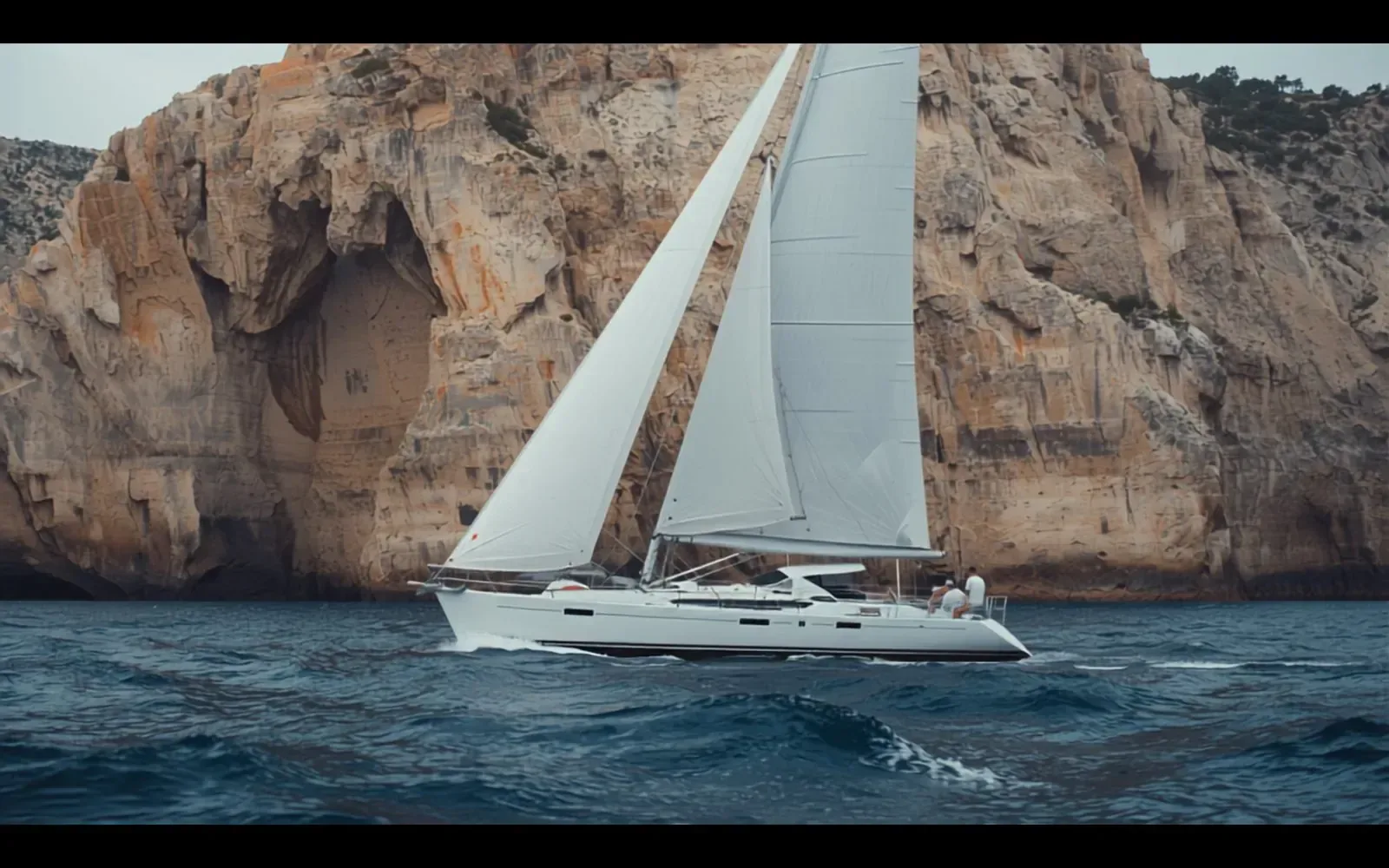
In Malta the winds have names. Maltese-language forecasts use them, and so do the people who work on the water. Each of the eight points of the compass has its own, and each name tells you which harbours and bays will be uncomfortable tomorrow. This guide gives the names, says when each wind is likely, and turns a forecast in Beaufort forces into what to do with lines, fenders and covers.
In short
- The commonest wind in every season is the north-westerly majjistral. It blows on about one day in five.
- The one to prepare for is the north-easterly grigal, the gregale. Grand Harbour, Marsamxett and the bays of the north-east coast all face it.
- From force 6 upwards, double the lines on the windward side and protect them from chafe. Do it before the wind arrives.
The eight winds and their Maltese names
| Maltese name | Blows from | Also known as |
|---|---|---|
| Tramuntana | North | Tramontana |
| Grigal | North-east | Gregale |
| Lvant | East | Levante |
| Xlokk | South-east | Sirocco |
| Nofsinhar | South | Ostro |
| Lbiċ | South-west | Libeccio |
| Punent | West | Ponente |
| Majjistral | North-west | Maestrale |
In Maltese, x is said “sh”, ċ is “ch” and j is “y”. So xlokk sounds like “shlock”, lbiċ like “il-beech” and majjistral like “my-yis-trahl”. Nofsinhar also means midday.
The names turn up on the map. Marsaxlokk is the port (marsa) of the south-east (xlokk), and the bay does open to the south-east.
Which winds are common, and when
Transport Malta’s wind figures give the north-westerly as the commonest wind in all seasons, on about 20.7% of the days in a year. Westerlies come next. Averaged over the year the wind is a modest 8.8 knots, but the average hides the months that matter: gale-force winds are most frequent in March and December, and rarest in July.
Two winds have a season.
- The grigal is most frequent in winter. It comes in two kinds. The short one lasts a day or two, when a low passes to the south or south-east of the islands. The long one can last up to five days, when high pressure sits over central Europe or the Balkans and low pressure over Libya.
- The xlokk, the sirocco, is most common in spring and autumn. It can last half a day or several days. It brings warm, humid air from North Africa, and often dust with it. See what Saharan dust does to a boat.
What each wind means for a berth or a bay
A wind matters to your boat when the berth or the bay is open to it. The same force 6 is a noisy night from one direction and a damaging one from another. Going round the compass:
- Tramuntana, north. Gozo’s north coast (Marsalforn, Ramla) is open to it, and so are the north-facing bays of Comino and Armier.
- Grigal, north-east. The mouths of Grand Harbour and Marsamxett face north-east. The sea runs in through the entrances and the surge reaches the creeks behind, so boats move back and forth on their lines for as long as it blows. St Julian’s, St Paul’s Bay and Mellieħa Bay face the same way. This is the wind our ten-minute berth check is written for.
- Lvant, east. Marsaskala and St Thomas Bay are open to it, and it still reaches into the north-east facing harbours.
- Xlokk, south-east. Marsaxlokk Bay and the coves of Delimara face it. In the north-east harbours it blows off the land, and you notice it less in the lines than in the damp below and the dust on deck.
- Nofsinhar, south. The south coast under the cliffs, the Blue Grotto, and Gozo’s southern inlets at Mġarr ix-Xini and Ix-Xatt l-Aħmar are open to it.
- Lbiċ, south-west. Xlendi on Gozo opens straight into it. So does Għar Lapsi on Malta’s south-west coast.
- Punent, west. Dwejra on Gozo, and Anchor Bay, Golden Bay and Għajn Tuffieħa on Malta.
- Majjistral, north-west. Ġnejna, Fomm ir-Riħ and the rest of Malta’s west coast take it head on. Most marina berths on Malta are on the other side of the island, in its lee. The water stays flat there, though it can still be gusty.
If you are choosing a bay for the day rather than a berth for the year, our anchorages guide goes round the islands bay by bay.
The Beaufort scale in knots, and what to do on the berth
The Malta Met Office gives the wind as a direction and a Beaufort force, for example “north-west force 4 to 5”. The force is the average wind. Gusts run higher. One knot is 1.85 km/h.
| Force | Name | Knots | What to do on the berth |
|---|---|---|---|
| 0 to 3 | Calm to gentle breeze | Up to 10 | Nothing special. A good day to air the boat. |
| 4 | Moderate breeze | 11 to 16 | Check covers are tied down. Tie halyards (the ropes that hoist the sails) away from the mast so they cannot slap. |
| 5 | Fresh breeze | 17 to 21 | Fold the bimini (the sun awning over the cockpit) if nobody is on board. Check the fenders sit where the boat actually touches. |
| 6 | Strong breeze | 22 to 27 | Double the lines on the windward side and add chafe protection. Take cushions and loose gear below. |
| 7 | Near gale | 28 to 33 | All of the above. Sprayhood down, covers lashed or off, shore power cable secured, tender lashed down or ashore. |
| 8 | Gale | 34 to 40 | The full berth check, finished before the wind arrives. Add a spare fender on each side. |
| 9 | Strong gale | 41 to 47 | As for a gale. Take off anything the wind can get hold of: canvas, and furled sails if there is time. |
| 10 and over | Storm and above | 48 and over | As above. Whatever is not done by now waits until it eases. |
Two things the table cannot tell you are the direction and the duration. A force 6 from the direction your berth is open to deserves the force 8 row. And lines chafe by the hour: a grigal that blows for five days needs better chafe protection than a blow that lasts one night.
Where to find the forecast, and who checks the boat
The Malta Met Office publishes a forecast for mariners covering 50 nautical miles around the islands, with wind, sea state and swell for three days. To read the sky and the charts yourself, see how to make your own weather forecast in 15 minutes.
A forecast only helps if someone can act on it. If you are abroad, that is what a care plan is for. Every plan includes care visits with a dated photo report. Gold adds a berth check when a storm warning is issued: lines, fenders and covers.
Need this done on your boat?
Care plans
Gold plan boats get a berth check when a storm warning is issued.