Red rain: what Saharan dust does to a boat in Malta
Southerly winds carry Saharan dust to Malta and light rain turns it to red mud. Why it should not sit on a boat, and how to wash it off properly.
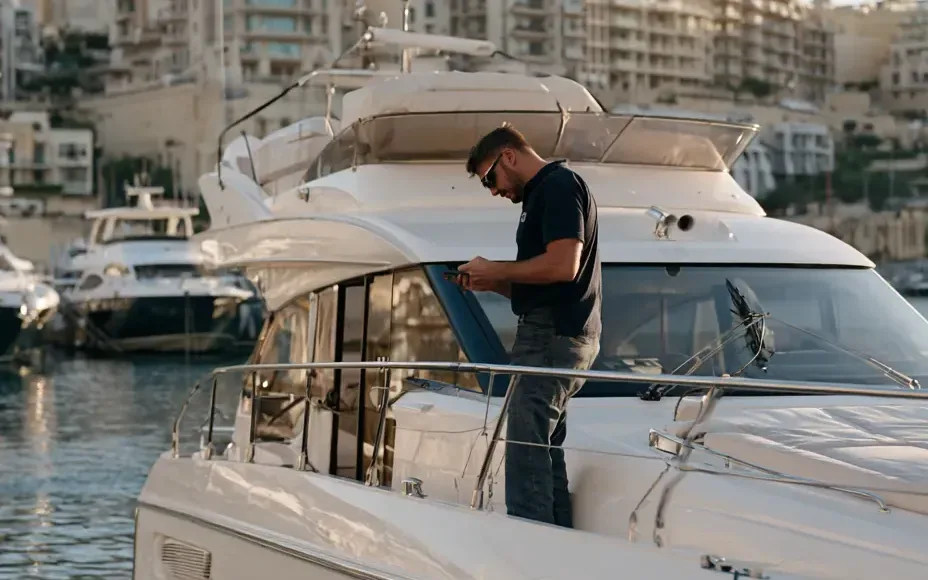
You left a white boat. The photograph that comes back shows a tan one, with brown runs down the topsides and a line of mud along every drain. Nothing is wrong with the marina. It has rained dust.
In short
- Red rain is Saharan dust washed out of the sky by a light shower. It is most likely in spring and autumn, on southerly winds.
- Never wipe it off dry. It is fine grit, and it scratches. Flood it off with fresh water first.
- Flush the drains, the tracks and the tender as well as the decks, and do it before the sun bakes the mud on.
What red rain is, and when it comes
Strong winds over the Sahara lift fine sand and dust high into the air. When low pressure moving across the Mediterranean pulls that air north, it reaches Malta on the xlokk, the warm, humid south-easterly, or on a southerly or south-westerly wind. The sky turns hazy.
Dust stays up until something brings it down, and that something is rain. Each drop collects dust as it falls and leaves it behind when it dries. A light shower is the worst case: enough rain to bring the dust down, not enough to wash it away. The Maltese name is xita tal-ħamrija, rain of soil. In English it is red rain or blood rain. The colour comes from iron oxides in the dust.
It can happen in any month, and in most years it happens several times. The xlokk is most common in spring and autumn, and those are the classic seasons for red rain. In summer the dust still arrives, but with almost no rain to carry it down it settles as a dry film instead. Our guide to the eight winds of Malta explains the xlokk and the other seven.
Why it should not be left on the boat
Dust on its own is a nuisance. Dust that has been wetted, dried by the sun and wetted again by dew and spray is a problem.
- It holds moisture and salt against gelcoat, stainless steel and canvas.
- It stains. Gelcoat that has lost its shine is porous and takes up the colour. So do canvas, cushions and bare teak.
- It blocks drains. Mud collects in the deck drains, the cockpit drains and the scuppers (the openings that let water off the deck). The next heavy shower then has nowhere to go, and autumn showers in Malta are heavy: about half the year’s rain falls between October and December.
- It scratches. The dust is mineral grit. Wiped dry, it works like fine sandpaper on gelcoat, glass, paint and clear plastic windows.
How to wash it off properly
The method matters more than the products.
- Wait for the dust to finish. Check the forecast. Washing in the middle of a dusty spell means doing it twice. Do not wait longer than that.
- Flood it first. Plenty of clean fresh water at low pressure, from the highest point down, until the water runs clear. No cloth, no brush and no sponge at this stage. Fresh water is on tap at the marinas and the shipyards.
- Then a mild wash. A soft brush or wash mitt and a mild boat shampoo, rinsed off before it dries.
- Teak gently. Fresh water and a soft brush across the grain. Never a pressure washer. More in our teak guide.
- Canvas and clear panels. Rinse covers, biminis (cockpit sun awnings) and sprayhoods on both sides and let them dry before folding. Rinse the clear plastic windows until nothing is left on them, then leave them to dry. Do not wipe them.
- Dry only what is clean. A chamois or a cloth is fine once the grit has gone.
If a tan shadow is still on the gelcoat afterwards, more scrubbing will not move it. It needs a cleaner or a polish, and that is a separate job.
The places it hides: drains, tracks, wipers and the tender
- Deck and cockpit drains. Run the hose into each one until clear water comes out overboard. Do the drain in the anchor locker too.
- Hatch gutters and window tracks. Mud in the channel of a sliding window or door grinds the track and blocks its drain holes.
- Wipers. Lift the blades and rinse both the blade and the glass before the wipers are used. One sweep across a dusty screen scratches it.
- The tender. An open tender collects the dust and the rain together. Pull the drain plug, rinse it out, rinse the outboard and put the cover back on.
- Solar panels. A film of dust cuts their output. Rinse them, do not rub.
- Sail covers and folded canvas. Dust sits in the folds. Open them out and rinse.
If you are abroad when the forecast shows dust
Saharan dust is forecast days ahead and usually makes the local news, so there is time to act.
Before it arrives, ask for the simple things: hatches and windows closed, covers on, cockpit cushions below, the tender covered and the cockpit drains clear.
Afterwards, ask for the washdown. A care visit is exactly this: a washdown with fresh water and a visual check that everything is still in order, with a dated photo report so you can see the decks, the drains and the tender for yourself. On a care plan you can ask for that month’s visit to be timed for the day after the dust. Stains that need polishing out are quoted separately.
Need this done on your boat?
Care plans
A fresh-water washdown on every care visit, with photographs.