How often should anodes be changed in Malta?
In a Maltese marina, plan on new anodes once a year and a check halfway. How to read the wear, what it tells you and what to ask for.
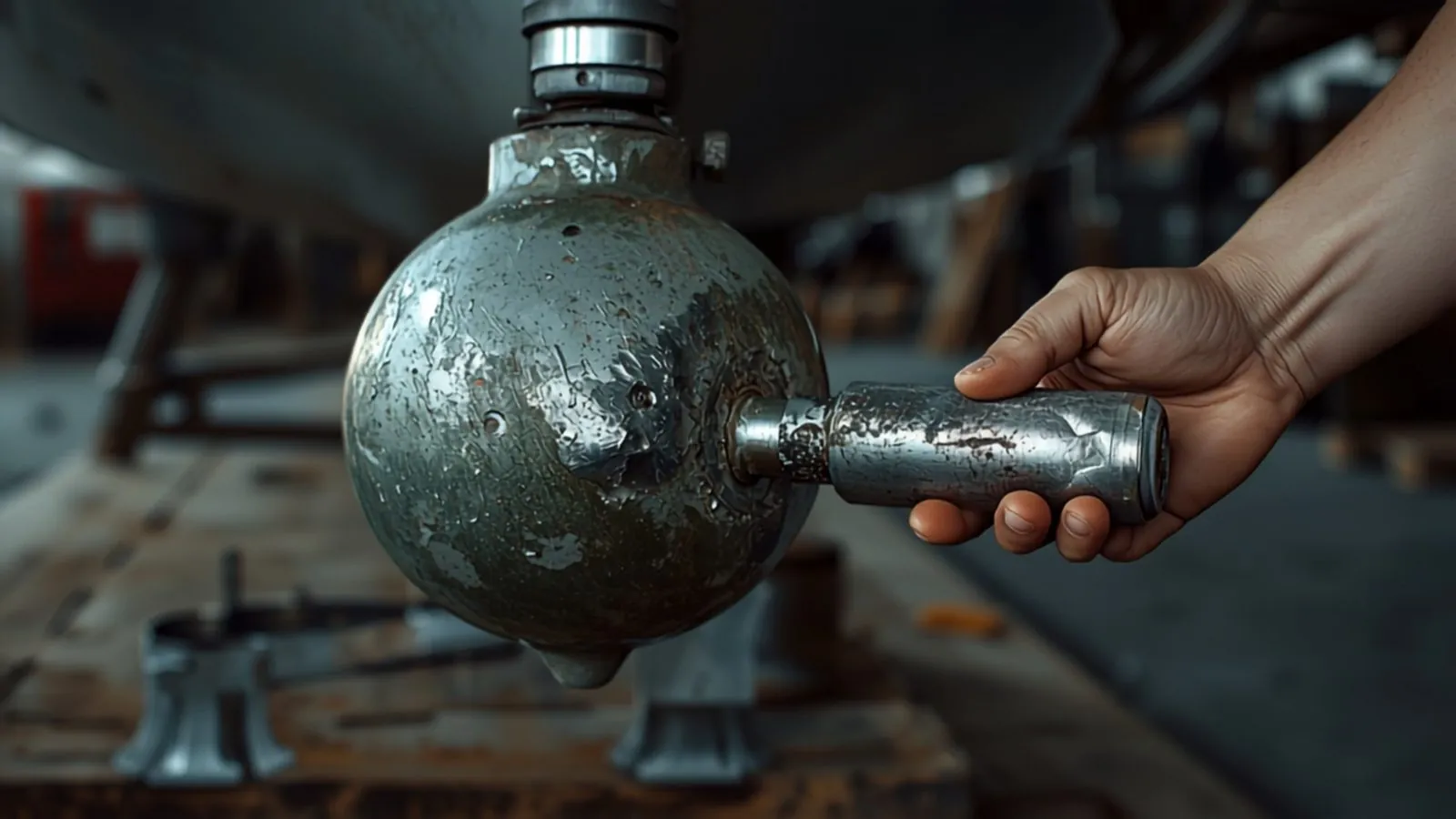
Why they go so fast here
Anodes are blocks of soft metal bolted to the hull, shaft and propeller. They protect your stern gear (the shaft, propeller and rudder) by corroding first. In a busy marina with shore power on every pontoon, they can go faster than the calendar suggests. The earth wire in the shore-power cable links your boat’s underwater metal to your neighbours’, so your anodes can end up working for their boats too. Warm water speeds it up again.
In short
- Replace an anode when about half of it has gone, not when it disappears.
- In Maltese marinas, check every six months and expect to replace yearly.
- Use the right material: zinc or aluminium for sea water, never magnesium.
Reading the wear
A healthy anode wears evenly and looks pitted. If it looks untouched after a year, it may not be making electrical contact, or it has been painted over, and it is doing nothing. If it has vanished in a few months, something on board or on a neighbouring boat is leaking current, and that is worth finding.

Left to right: new, time to replace, left too long.
What you can check from the pontoon
- Outboards and sterndrives. Tilt the leg up and the anodes are in plain view.
- Transom and trim tabs. Often visible from the bathing platform in clear water.
- Shaft, propeller and bow thruster. These need a diver, or a waterproof camera on a pole.
- Your shore power. If it trips often, say so. The same fault can eat anodes.
What happens if they are left
Once the anode has gone, the next metal in line starts to corrode. That means the propeller, the shaft, the leg of a sterndrive or saildrive, and the fittings that pass through the hull. A bronze propeller that is turning pink is losing metal. So is an aluminium leg with pitted, blistered paint. Any of these costs many times the price of an anode.
When they are changed in the Maltese year
The natural time is the yearly haul-out, usually in late winter or spring, when every anode can be reached and the hull is being painted anyway. See how long antifouling lasts in Maltese water. Around the end of the summer, have them looked at again. A diver can change shaft and propeller anodes in the water, so nothing has to wait for the next lift.
Engines have their own small anodes inside the cooling system. Those are changed at the engine service.
What to ask for on a quote
- Every anode listed by position and material. Magnesium is for fresh water only.
- Contact surfaces cleaned back to bright metal, and the anodes left unpainted.
- A photo of each old anode beside its replacement, with a note of how much was left.
- If they went quickly, a check of the bonding wires that link the underwater fittings to the anodes, and whether a galvanic isolator would help. That is a small device in the shore-power earth that blocks stray current from other boats. It is a job for a marine electrician.
Anodes are part of our antifouling and haul-out work, and we arrange a diver in between.
What we do on a care visit
On every care visit we photograph the anodes we can see from the surface. On haul-outs we photograph and measure each one and replace any past half.
Need this done on your boat?
Antifouling & haul-out
Anodes replaced and recorded at every haul-out, by a diver in between.
