Keeping a RHIB or tender in Malta: sun, storage, servicing
What Malta's sun, heat and salt do to a RHIB or tender, whether to keep it afloat or ashore, and what the outboard needs before and after storage.
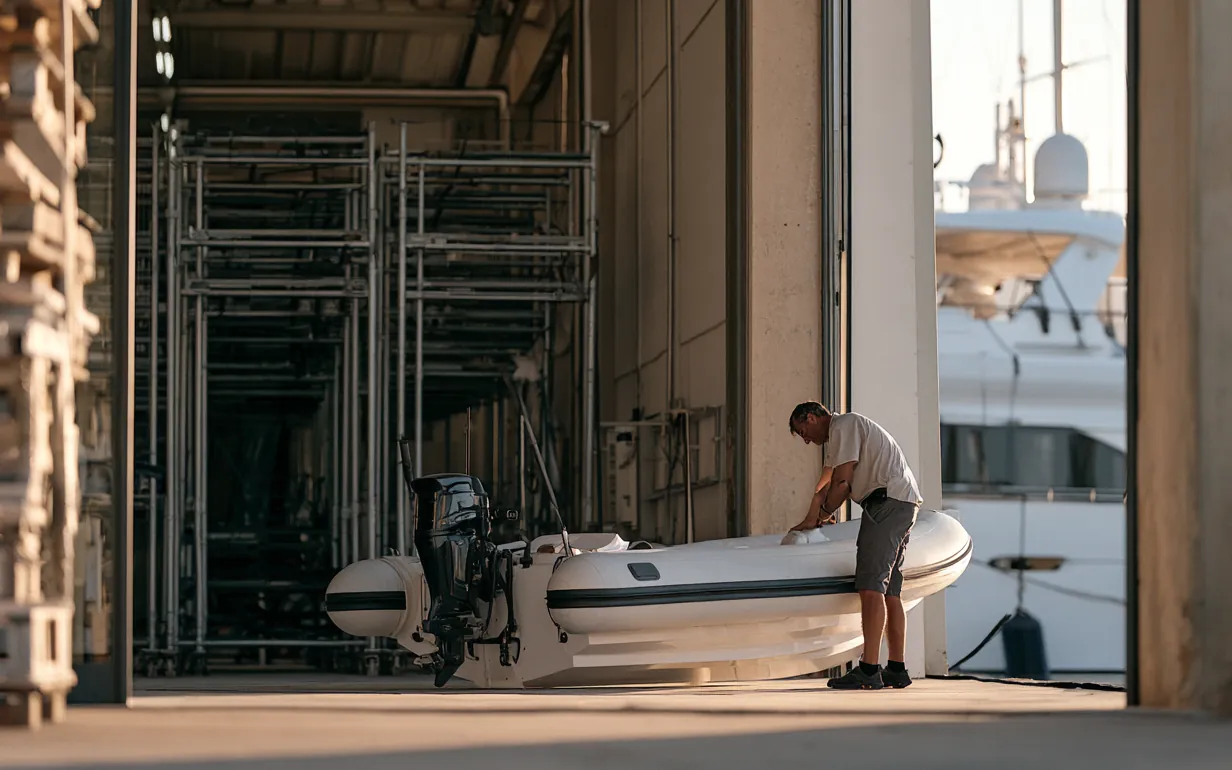
A RHIB (rigid inflatable boat) is a hard hull with inflatable tubes around it. A tender is the small boat that serves a bigger one, and it is very often a RHIB. Most spend far more time sitting than moving, and how they are kept in that time decides how long the tubes, seats and outboard last.
What sun, heat and salt do to it
- Tubes. Strong sun fades the fabric and hardens it. A tube that has gone chalky, sticky or finely cracked has had too much.
- Seams. Many seams are glued, and heat is hard on glue. Look for edges lifting where the tube meets the hull and around the transom, the flat back of the boat.
- Pressure. Air expands as it warms. A tube pumped firm in the cool morning can be far too hard by afternoon, so let some out. One chamber softer than the rest is a leak.
- Valves. Salt and sand in a valve cause slow leaks. Rinse them and keep the caps on.
- Upholstery. Vinyl cracks, and the stitching usually gives up before the fabric does.
- Salt. It dries into crystals that work like grit in every fold and under every seat base, and it corrodes metal fittings. Rinse with fresh water after every outing.
PVC or Hypalon tubes
Tubes are made of one of two main fabrics.
Hypalon, often labelled CSM, is a synthetic rubber. It stands up better to sun and heat. Its seams are glued by hand, it is heavier, and it costs more.
PVC is lighter and cheaper, and its seams can be welded. It ages faster in strong sun, fading and hardening.
In Malta’s climate neither should be left uncovered, and a cover matters most on PVC. The builder’s plate or the manual will tell you which you have. Tell whoever repairs the boat too, because each fabric needs its own glue and method.
Afloat on a berth, or ashore under cover
Afloat, the boat is ready whenever you are. The trade-off is growth and exposure. The hull needs antifouling paint. Weed and barnacles also settle on the tubes at the waterline, and scraping them off harms the fabric. The outboard has to be tilted clear of the water. Rain has to drain or be pumped out, which depends on a battery. And the boat sits in the sun and the wind all year.
Ashore under cover, there is no growth, no sun and nothing to worry about in a gale. The trade-off is that every outing starts with a launch.
Either way, use a cover that breathes and is propped so rain runs off.
We store RHIBs and tenders dry and under cover, for the winter (November to April) or the full year, and we look after the servicing of the boats stored with us. Launch and collection are on request and quoted separately. The boat stays on your own insurance, so tell your insurer where it is kept. The details are on our RHIB and tender storage page.
What the outboard needs when it sits
- A fresh-water flush after every use in salt water. Engine makers advise it every time.
- Fuel that will keep. Petrol goes stale. Before a long stop, add a stabiliser and run the engine long enough to draw it through.
- A charged battery. Charge it fully, then disconnect it or keep it on a maintenance charger.
- An upright position, so water drains out of the engine.
- A service once a year, and always before storage.
Before you store it for the winter
- Wash the boat, the tubes and under the seats with fresh water and mild soap, and let it all dry before the cover goes on.
- Leave the tubes inflated but a little soft.
- Take cushions and electronics off, or stand the cushions on edge.
- Take the drain plug out and raise the bow, so any water runs away.
- Flush the engine, treat the fuel and have it serviced.
Not sure when the season ends? See the boating year in Malta, month by month. Leaving a bigger boat with the tender on it? Use our checklist for leaving the boat.
Before the first launch
- Tubes. Pump them to the builder’s pressure the day before. A chamber that has lost air overnight needs looking at. Look over the seams and the valve caps.
- Drain plug. In.
- Fuel. Fresh petrol. Check the fuel line and the primer bulb for cracks.
- Engine. Start it before the day, not on it. Check for the tell-tale, the thin stream of water that shows the cooling pump is working.
- Controls. Steering from lock to lock, and the kill cord, which stops the engine if the driver falls.
- Safety gear. Lifejackets, anchor, and the dates on the flares.
Trailers and launching
Rinse the trailer’s wheels, hubs and brakes with fresh water after every launch. Let the hubs cool before they go in, because hot bearings draw water in as they cool.
Trailer tyres usually perish in the sun before they wear out. Check the sidewalls and the pressures, including the spare.
Look at the slipway on foot before you reverse down it. Weed on the lower part is slippery. Swell makes recovering the boat harder than launching it, so check the forecast for the time you plan to come back.
Need this done on your boat?
RHIB & tender storage
Stored under cover, serviced, launched when you want it.
